17 DIY Desk Organization Ideas on a Budget
DIY desk organization ideas on a budget, with simple steps for jar holders, cardboard dividers and a monitor riser, plus cable and paper systems.
This post may contain affiliate links. If you buy through them, we may earn a small commission at no extra cost to you. Images are AI-created concepts.
In this post
- Plan Your Desk Zones
- Cardboard Drawer Dividers
- A Mason Jar Pen Holder
- A DIY Monitor Riser With Storage
- A Pegboard Above the Desk
- A Simple Sticky Note System
- Floating Shelves Above the Desk
- Tame the Cables
- Fabric-Covered File Holders
- A Three Tray Paper System
- Recycled Tin Can Organizers
- A Rolling Cart Beside the Desk
- Under-Desk Storage
- A Small Space Desk Nook
- A Cozy Creative Workspace
- A Hidden Charging Station
- A Weekly Desk Reset
A messy desk slows you down more than you notice. Every search for a pen, a charger or a lost sticky note breaks your focus, and a pile of papers makes even a short task feel heavy.
These DIY desk organization ideas fix that with things you mostly already have, like jars, cardboard boxes, scrap wood and tin cans. You will find simple steps for each project, real sizes for shelves and a monitor riser, and easy systems for cables, papers and sticky notes that keep the desk clear.
Start with the zone plan in the first idea, then pick two or three projects. A calm desk is built in an afternoon and kept with a five minute reset each week.
1. Plan Your Desk Zones
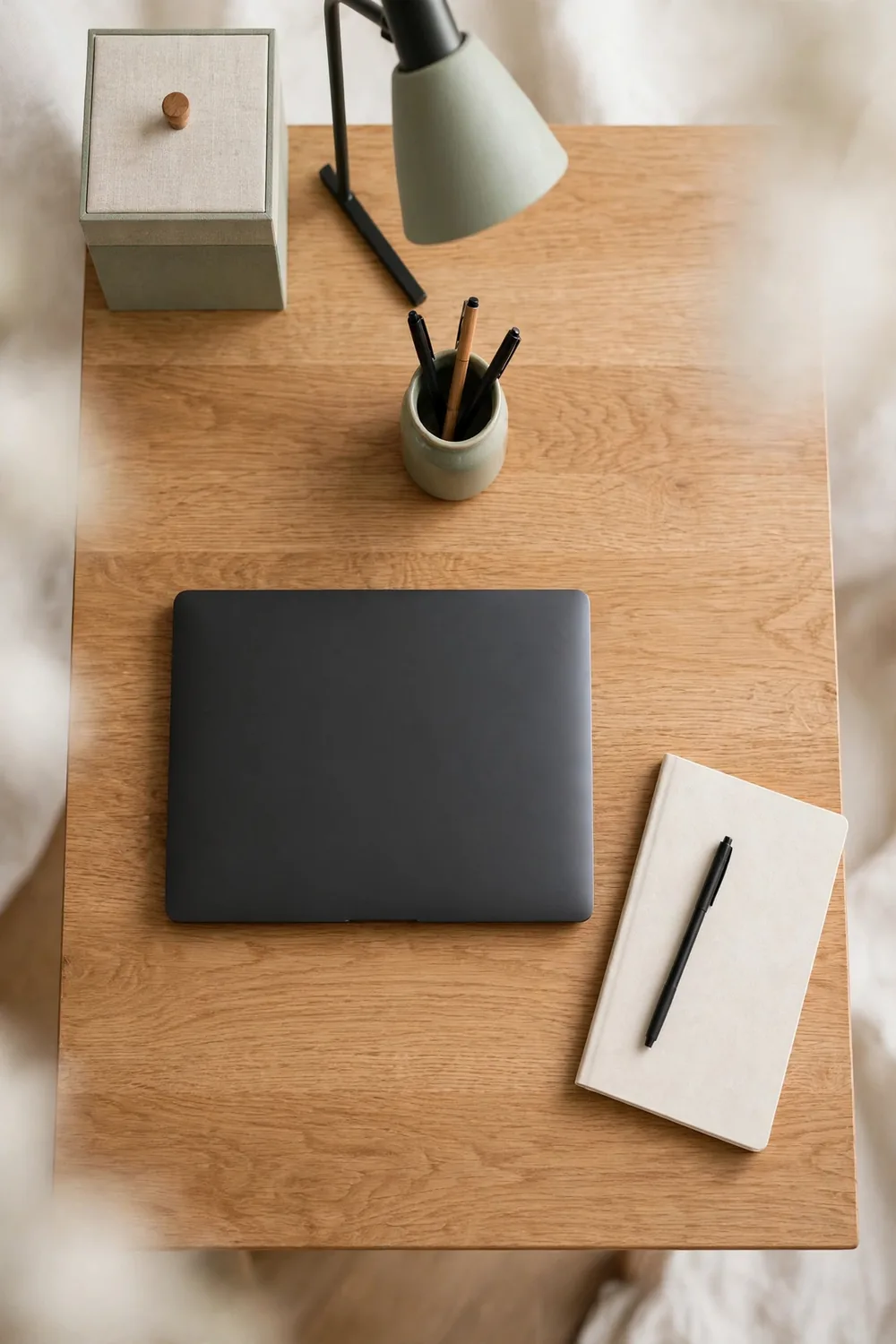
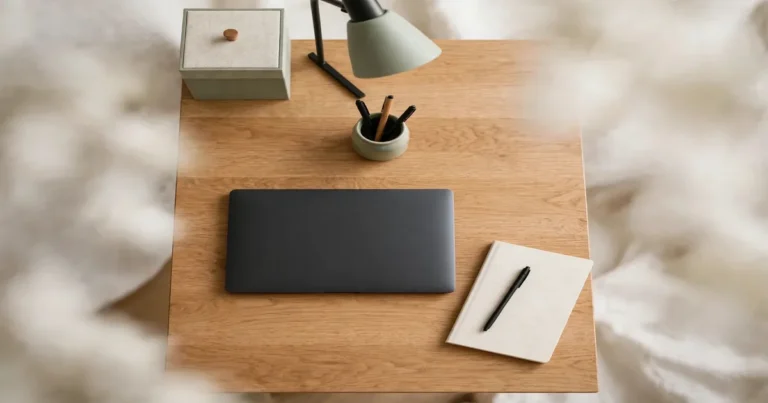
Good desk organization starts with where things go, not what you buy.
| Zone | Distance from you | What goes there |
|---|---|---|
| Main work zone | Directly in front | Laptop, keyboard, notebook |
| Easy reach | About 15 to 20 inches | Pens, phone, water |
| Further back | Edge of the desk | Lamp, plant, jar holders |
| Stored away | Drawers or shelves | Spare supplies, files |
Only the things you use every day belong on the desk surface. Everything else goes in a drawer, a box or on a shelf.
2. Cardboard Drawer Dividers
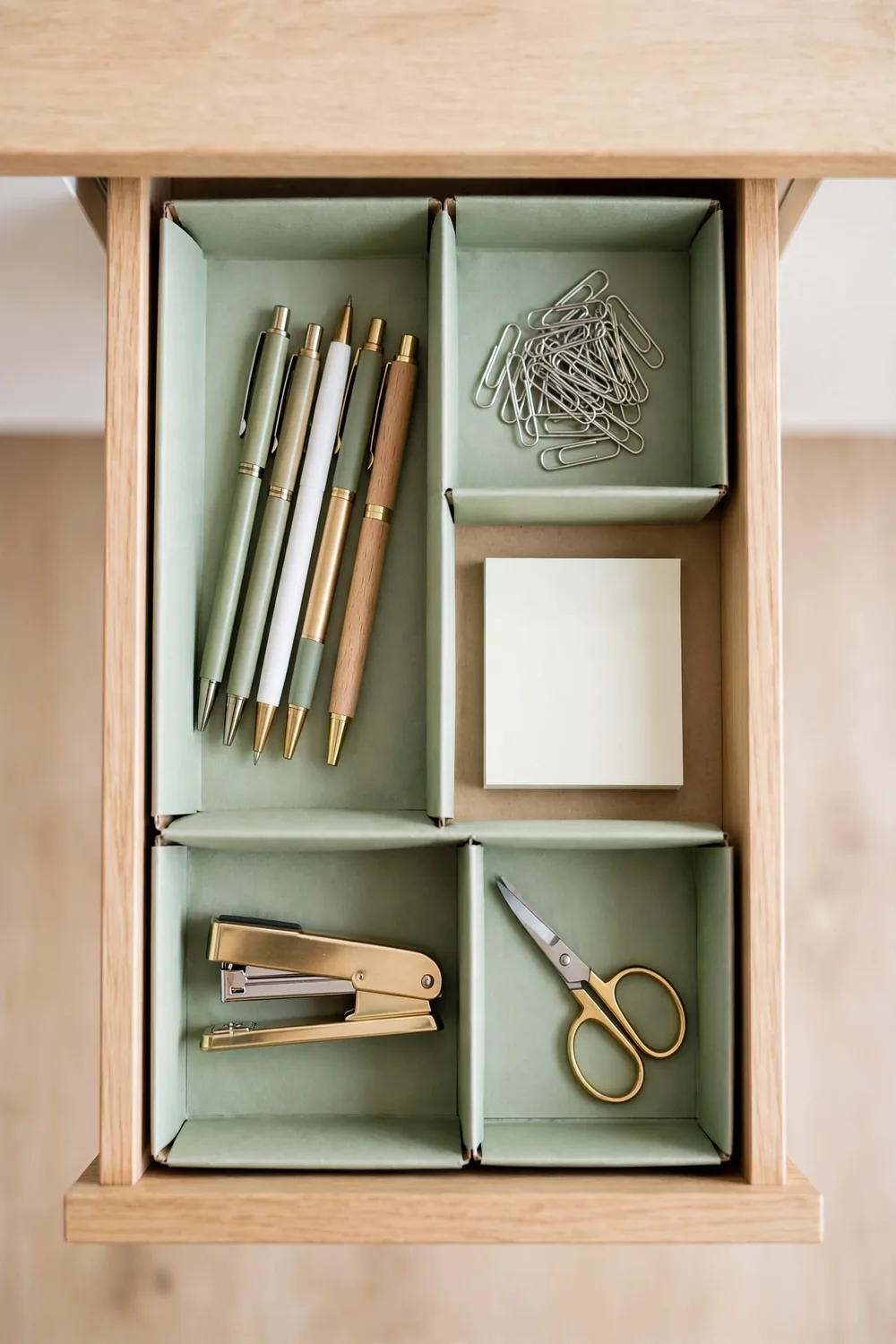
Cost: Low | Time: 30 minutes | Skill Level: Beginner
A drawer without dividers becomes a jumble in a week. Measure the inside of the drawer, cut strips of sturdy cardboard to fit, slot them together with small notches and cover them with pretty paper. Make sections for pens, clips, sticky notes and small tools, and everything stays where you put it.
3. A Mason Jar Pen Holder
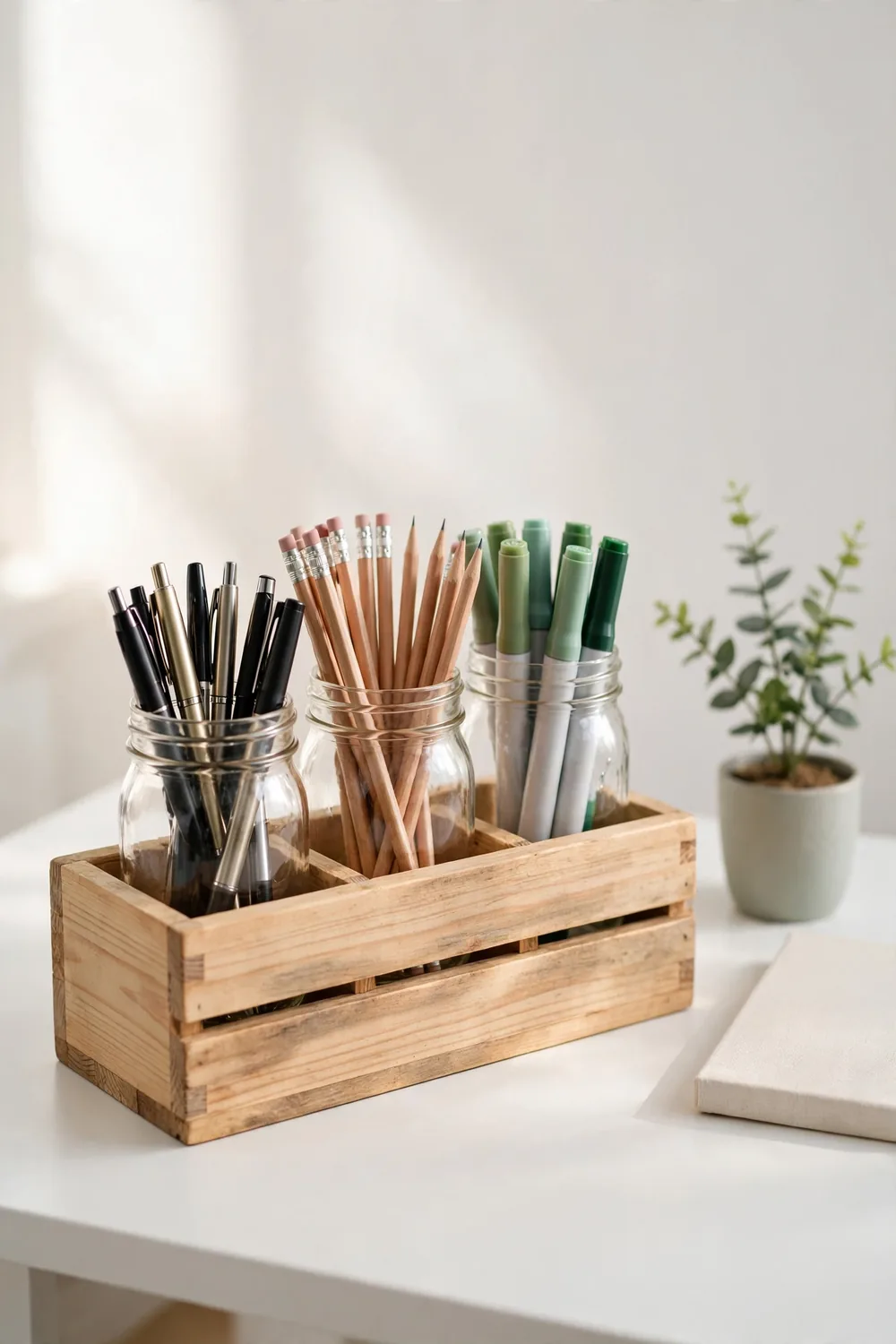
Mason jars make simple, sturdy holders for pens and tools.
- Choose three jars of the same size.
- Cut a scrap wood base and three short side pieces.
- Glue or screw them into a small open box.
- Set the jars inside and sort pens, pencils and markers.
Clear jars let you see everything at a glance. Add a jar for scissors and rulers if you have room.
4. A DIY Monitor Riser With Storage
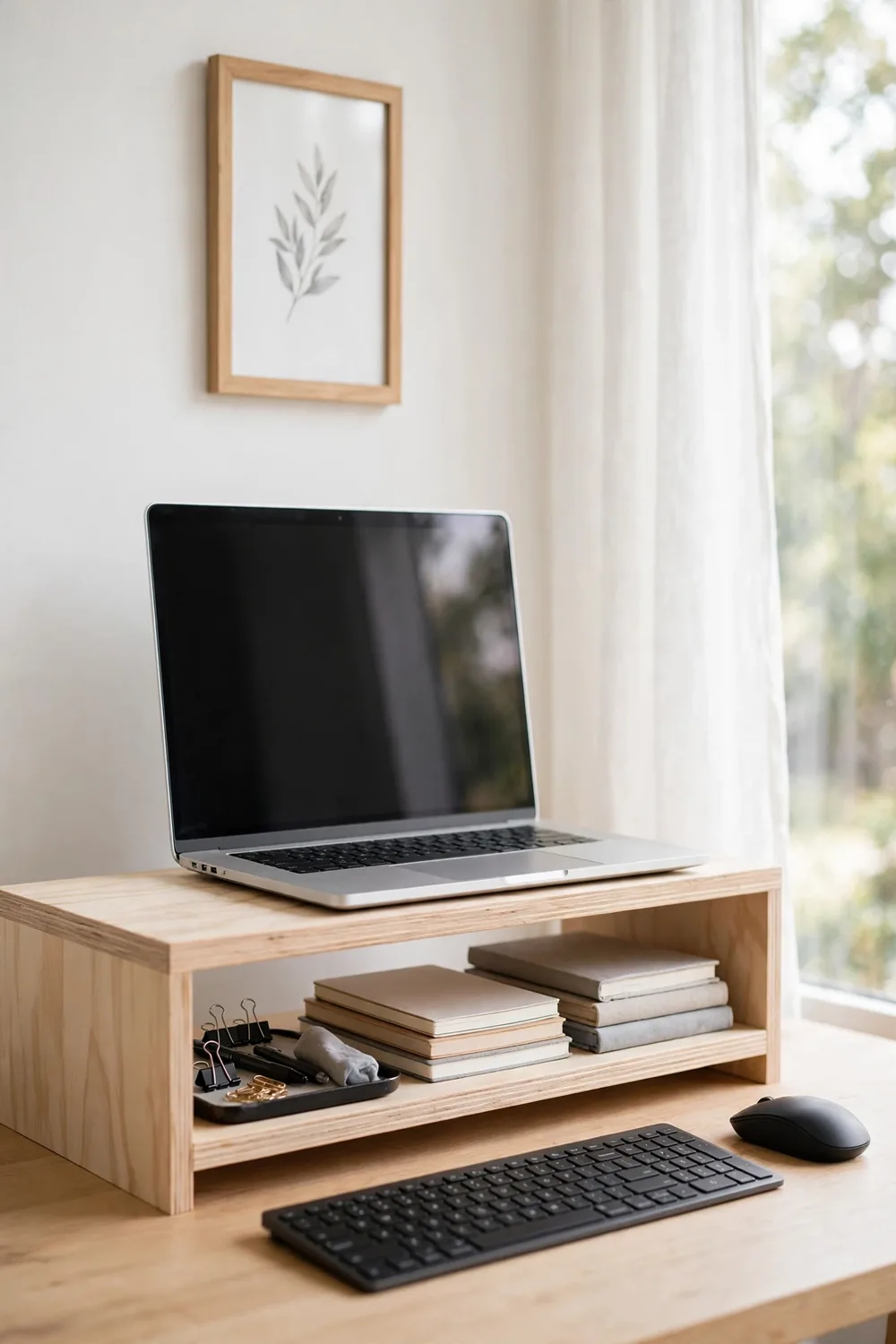
A riser lifts your screen to a healthier height and adds storage underneath.
- Aim for the top of the screen at or just below eye level.
- Keep the screen about an arm’s length away.
- Most risers are 4 to 6 inches tall.
- Make it wide enough for a keyboard to slide under.
Build it from one board for the top and two short boards for legs, sanded and sealed. The space below holds notebooks or a small tray.
5. A Pegboard Above the Desk
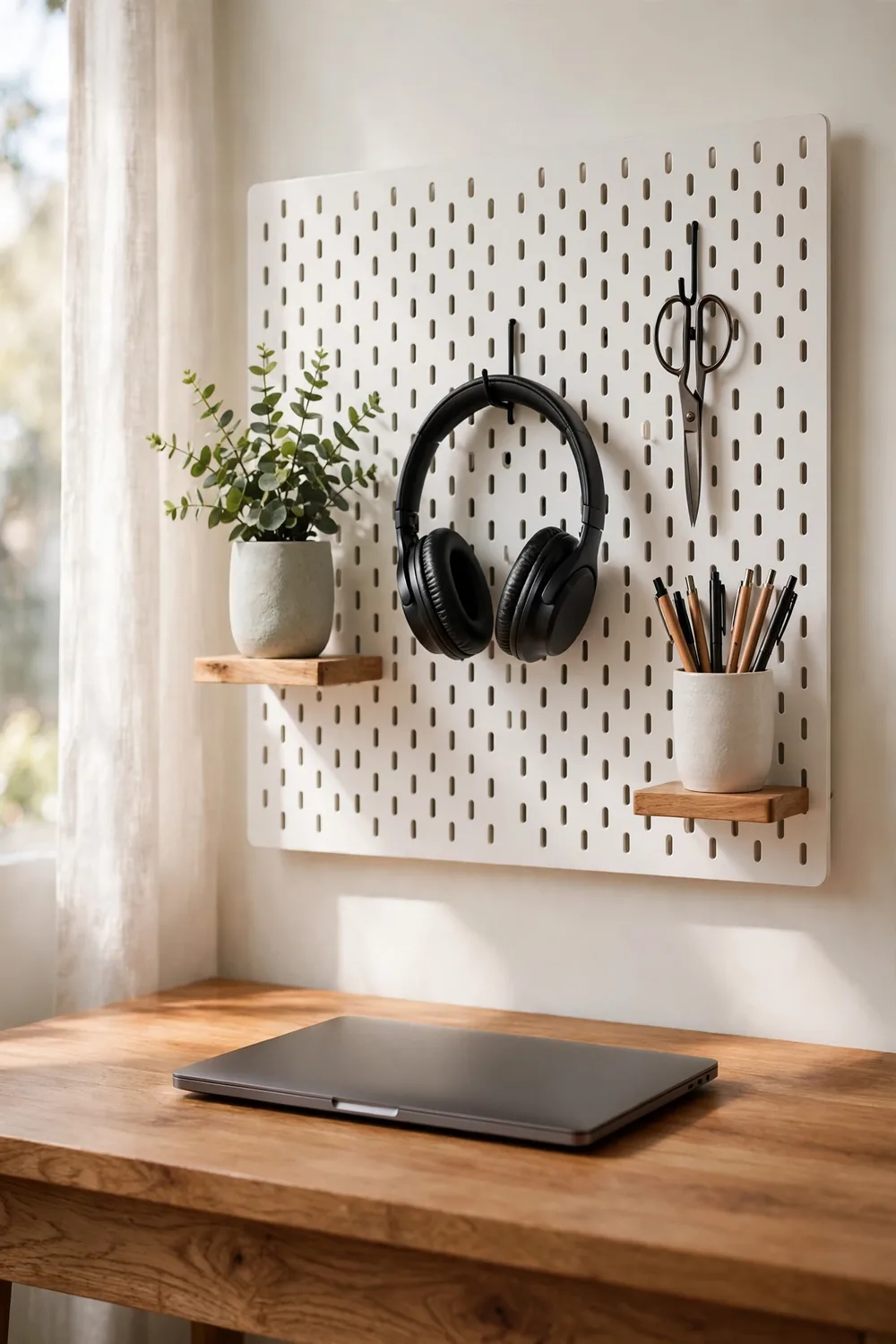
A pegboard moves supplies off the desk and onto the wall.
- Mount the board on spacers so hooks can fit behind it.
- Start the bottom edge about 12 inches above the desk.
- Add hooks, small shelves and cups.
- Rearrange whenever your needs change.
Paint the pegboard the wall color for a calm look, or a soft color for a creative workspace.
6. A Simple Sticky Note System
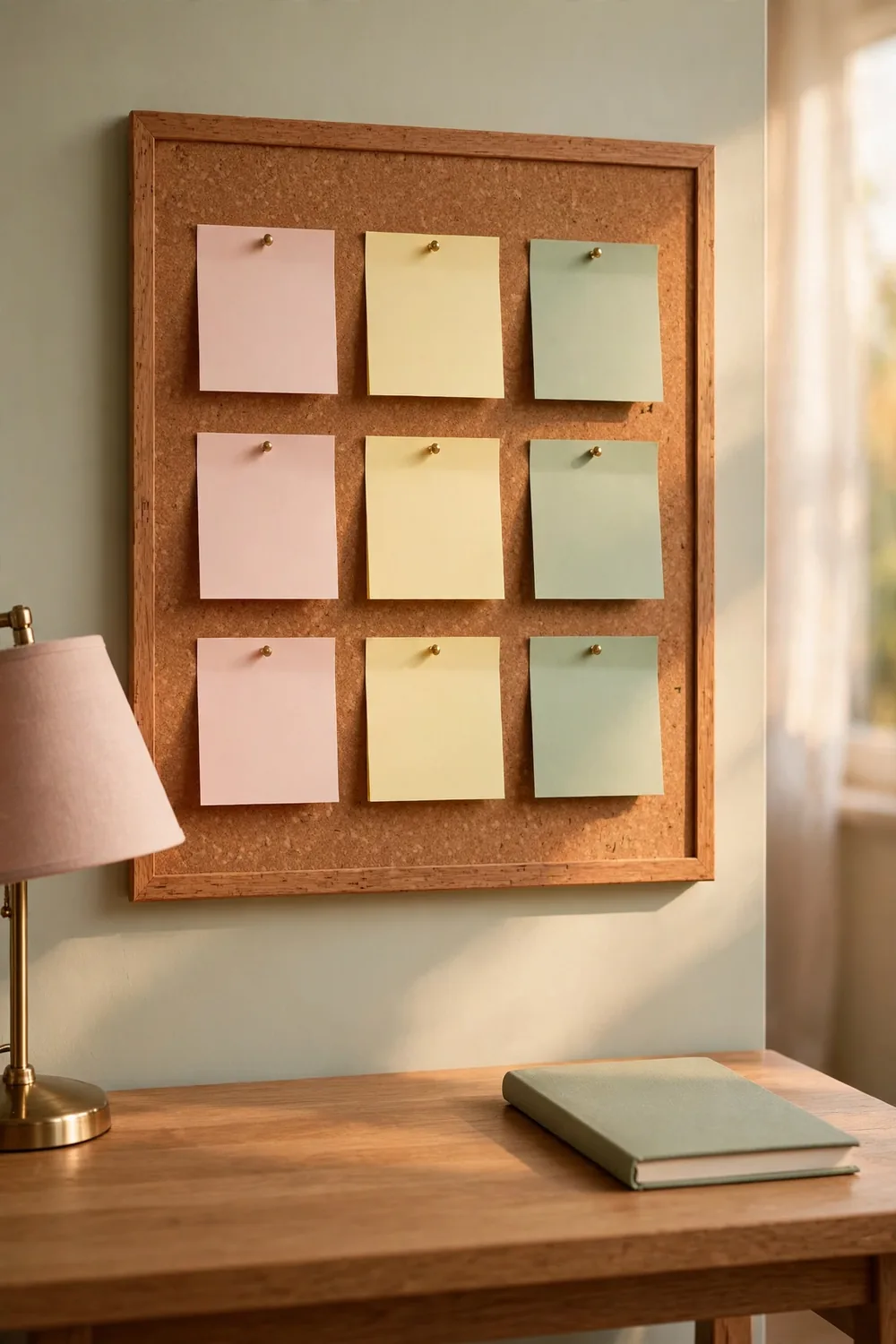
Cost: Low | Time: 20 minutes | Skill Level: Beginner
Sticky notes create clutter when they are everywhere. Give them one home, like a cork board or the inside of a cabinet door. Use three colors for three types: to do, waiting and ideas. Line them up in columns and throw away each note as soon as it is done.
7. Floating Shelves Above the Desk
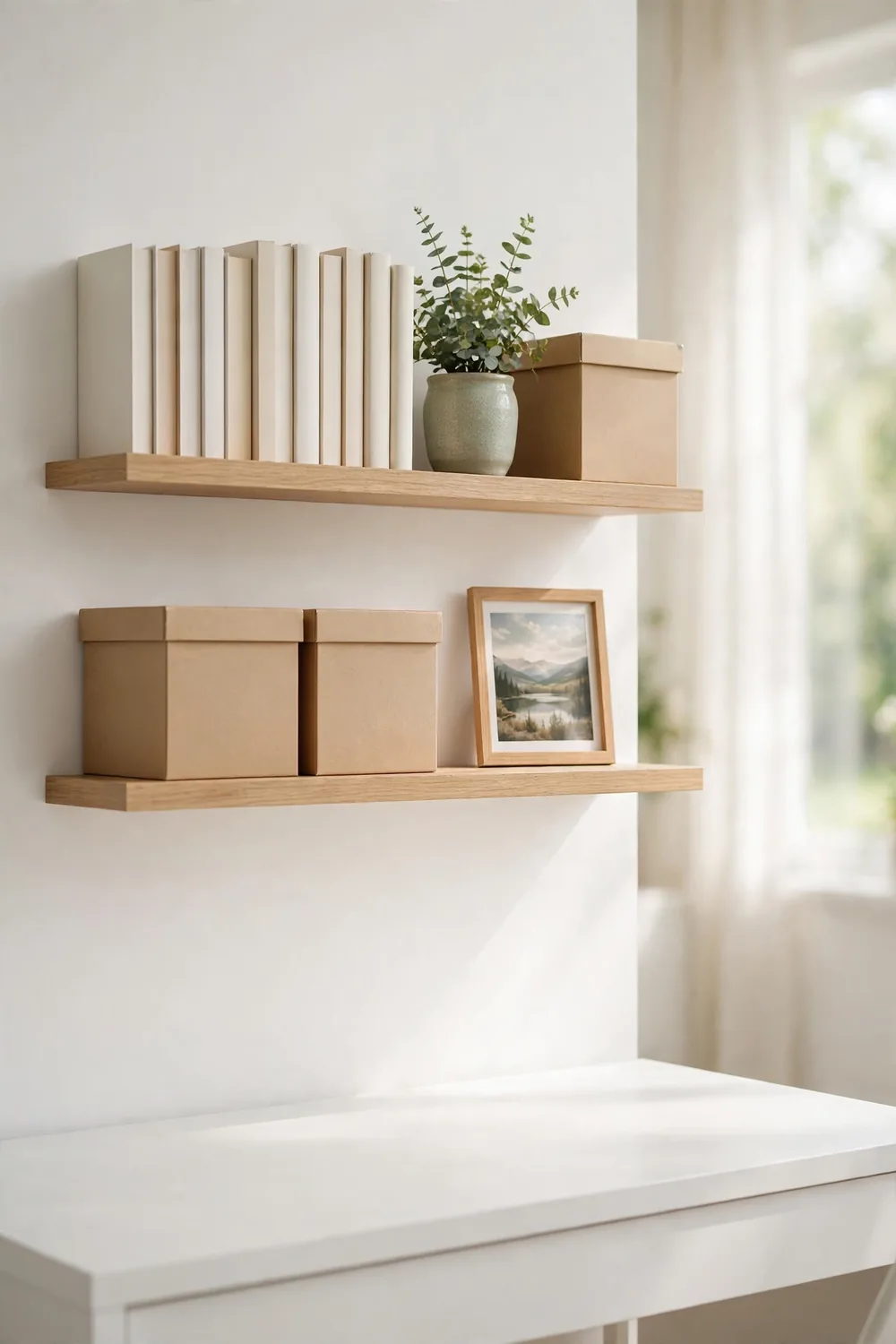
Shelves above the desk free up the work surface.
- Keep shelves 8 to 10 inches deep.
- Mount the first shelf about 15 to 18 inches above the desk.
- Leave 12 inches between shelves.
- Mount into studs if you store books.
Put things you use weekly on the lower shelf and rarely used items higher up.
8. Tame the Cables
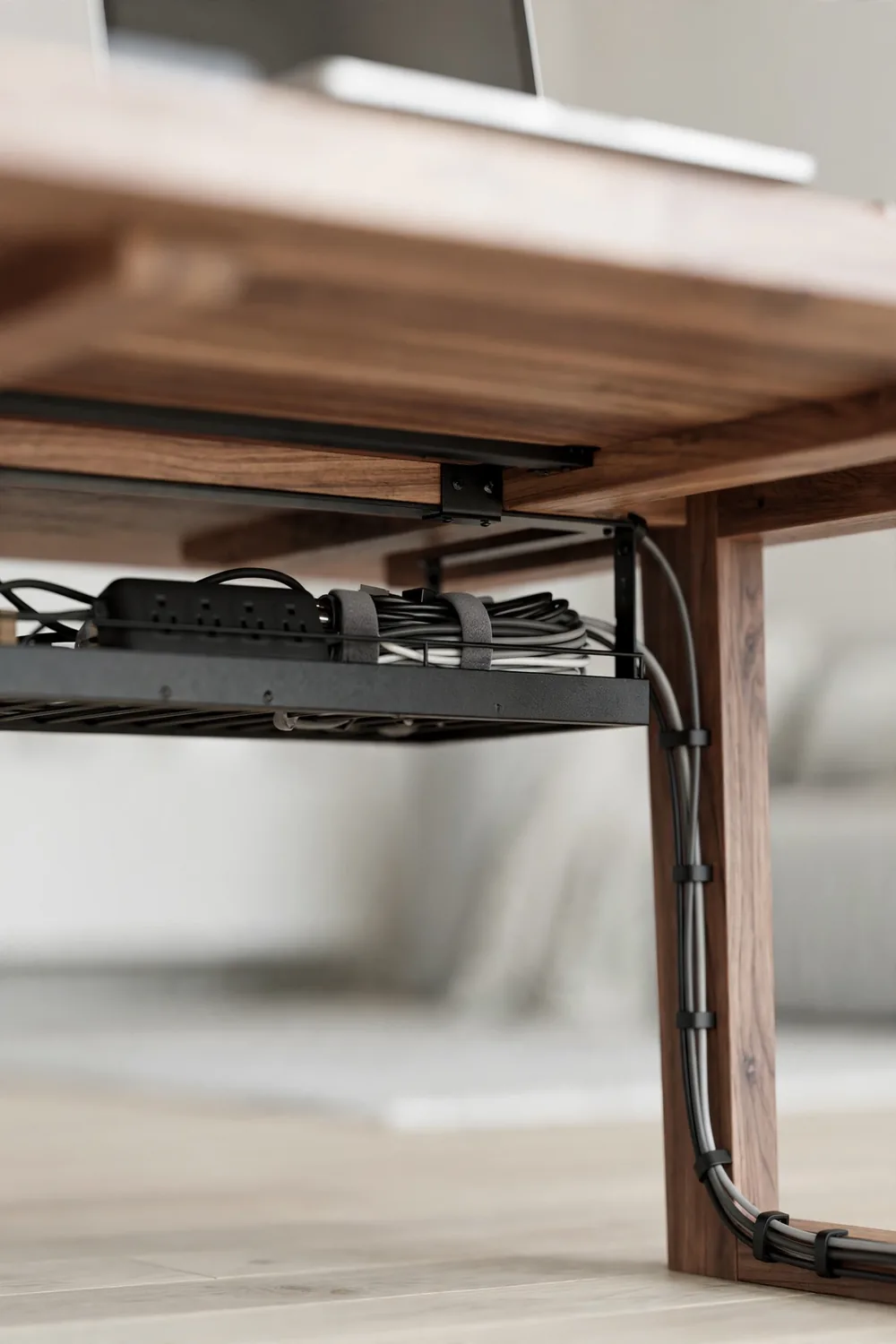
Tangled cables make even a tidy desk look messy.
- Mount a cable tray or basket under the desk.
- Put the power strip in the tray.
- Bundle cords with reusable straps.
- Use binder clips on the desk edge to hold charging cables.
Label plugs with small tags so you know which cord belongs to which device.
9. Fabric-Covered File Holders
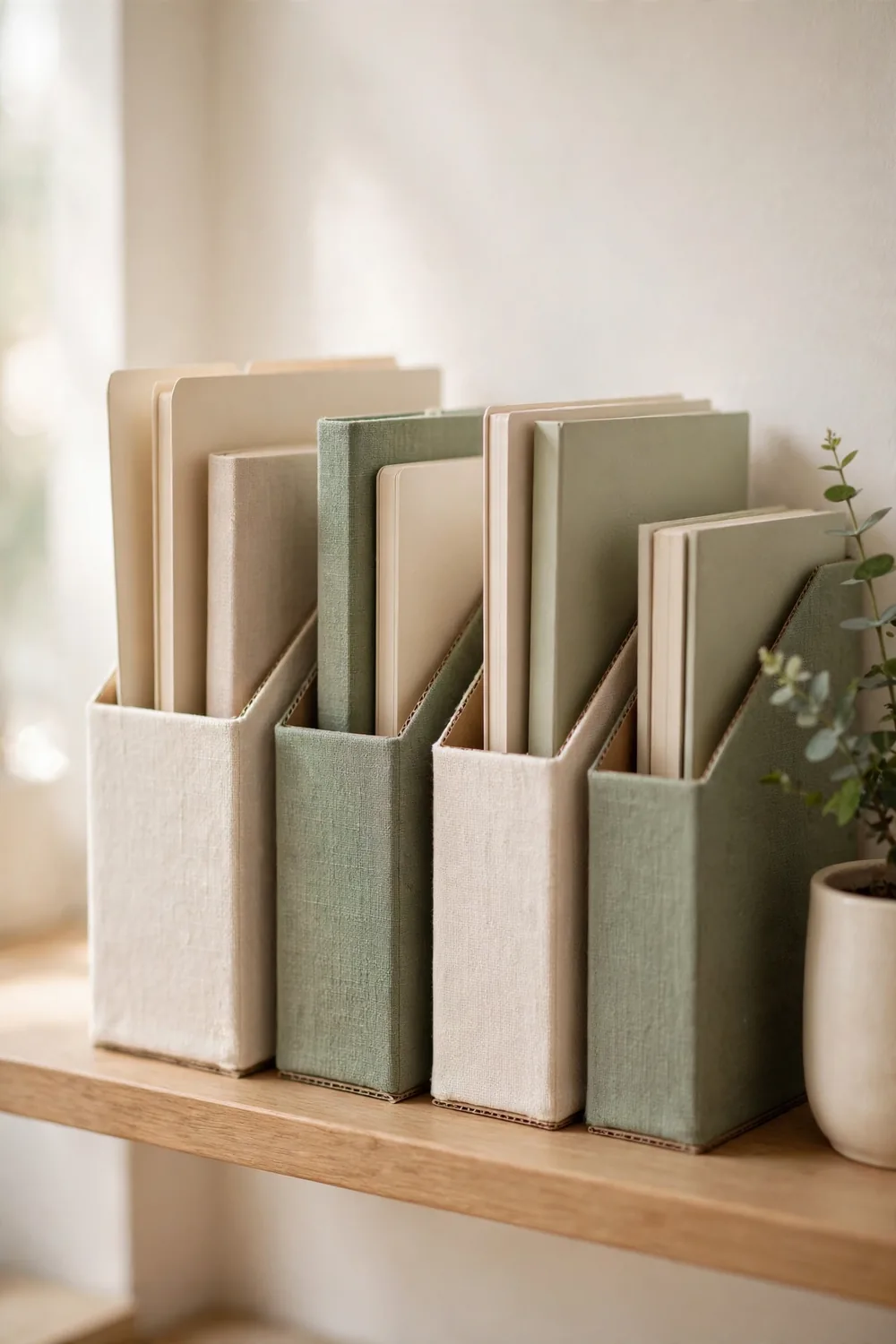
Upright file holders keep papers and notebooks standing instead of piling up.
- Cut cereal or shipping boxes at an angle.
- Cover them with fabric using spray adhesive.
- Line them up on a shelf or the back of the desk.
Fabric gives them a soft, finished look that matches the room instead of looking like office supplies.
10. A Three Tray Paper System
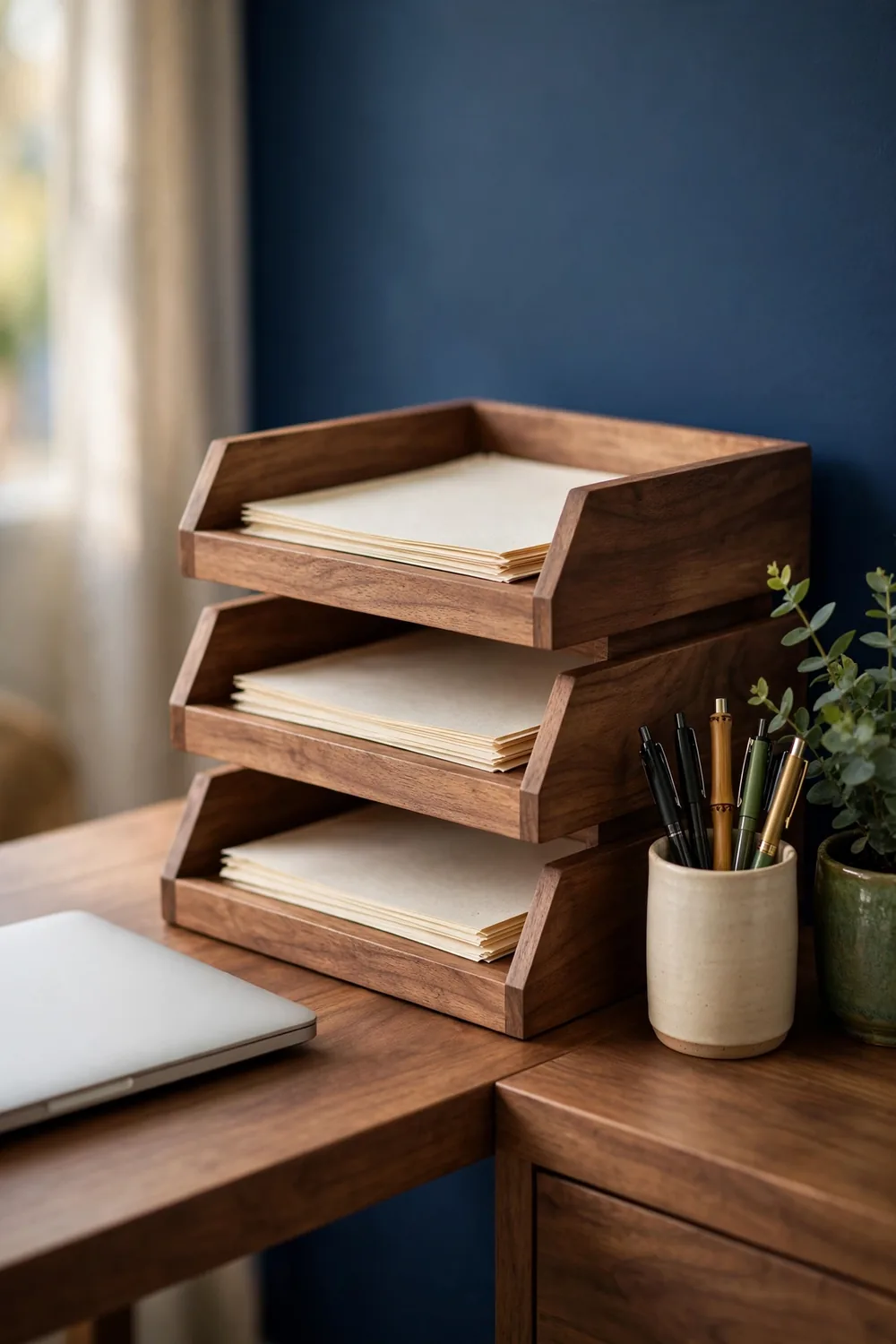
Most desk clutter is paper waiting for a decision.
| Tray | What goes in |
|---|---|
| In | New mail and papers |
| Action | Things to do this week |
| File | Papers to store or scan |
Empty the In tray once a day and the File tray once a week. Anything you do not need goes straight to recycling.
11. Recycled Tin Can Organizers
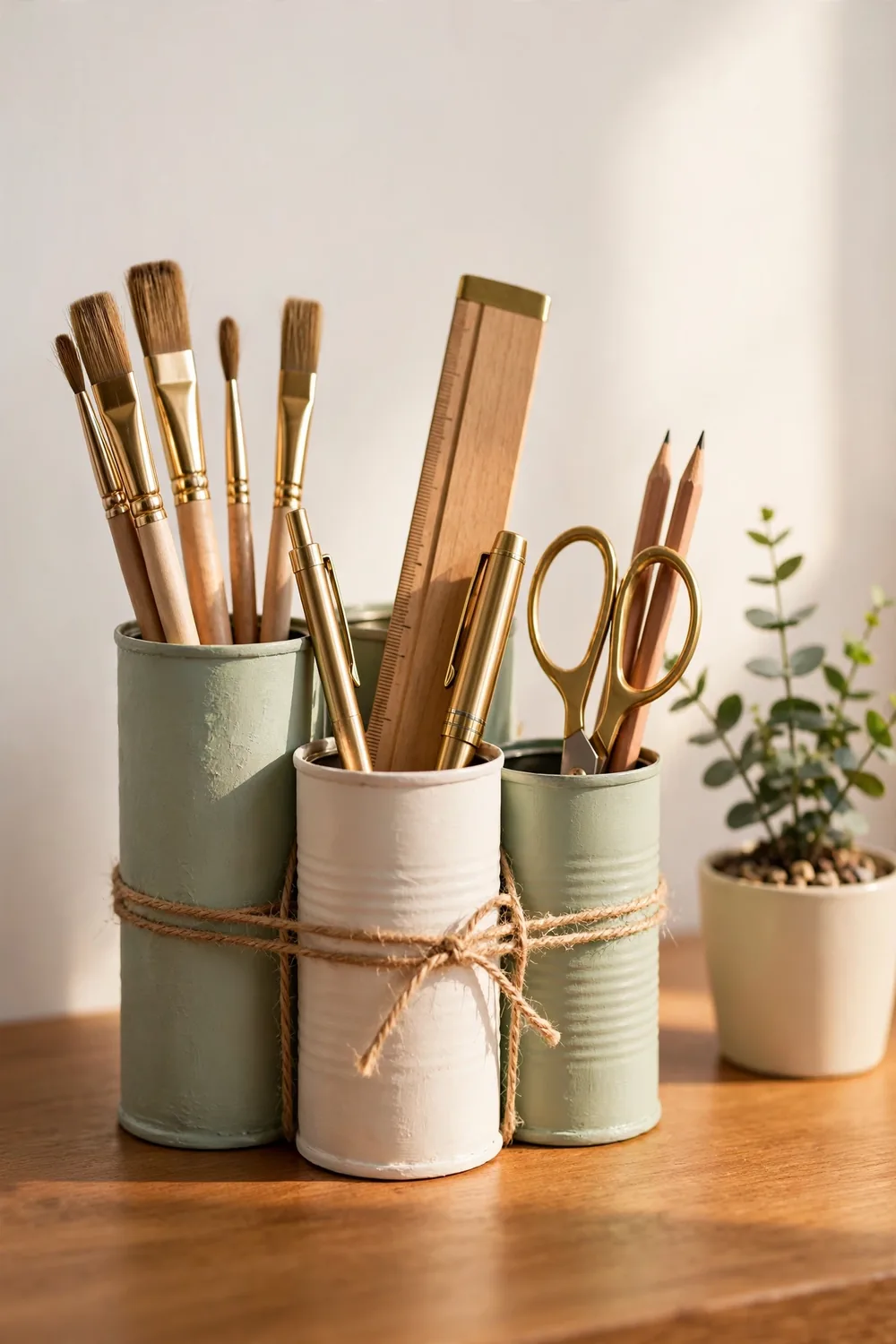
Cost: Low | Time: 1 hour | Skill Level: Beginner
Clean tin cans turn into free organizers. Remove labels, sand any sharp edges and paint them in one or two soft colors. Glue three or four cans together at different heights for a grouped holder, or wrap them in twine or rope for texture. It is one of the easiest best out of waste projects there is.
12. A Rolling Cart Beside the Desk
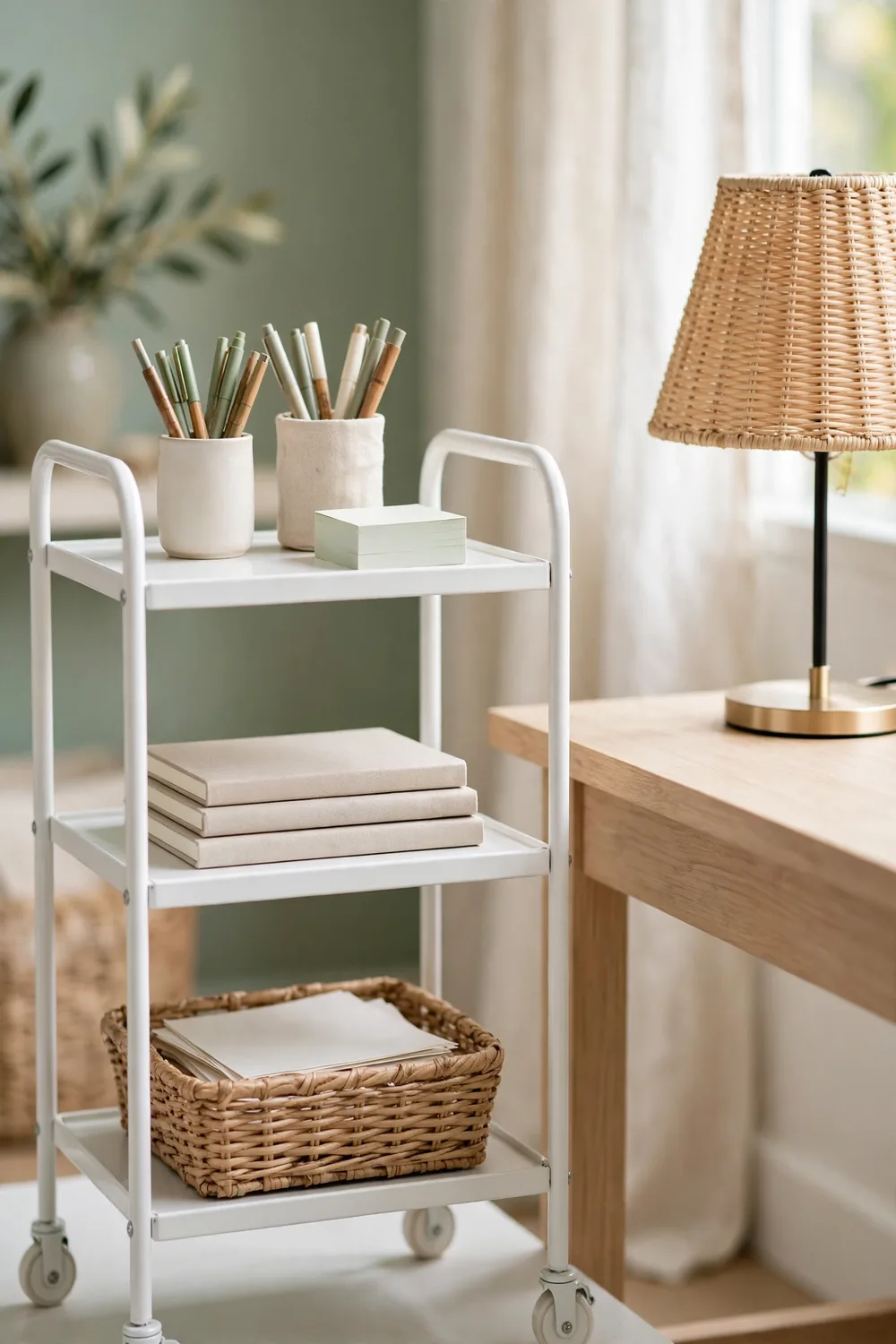
A rolling cart adds storage without a bigger desk.
- Top shelf: daily supplies in small cups.
- Middle shelf: notebooks and current projects.
- Bottom shelf: paper, printer ink or a basket.
- Roll it away when you need the space.
It works especially well in a bedroom or living room desk corner, where a big cabinet would not fit.
13. Under-Desk Storage
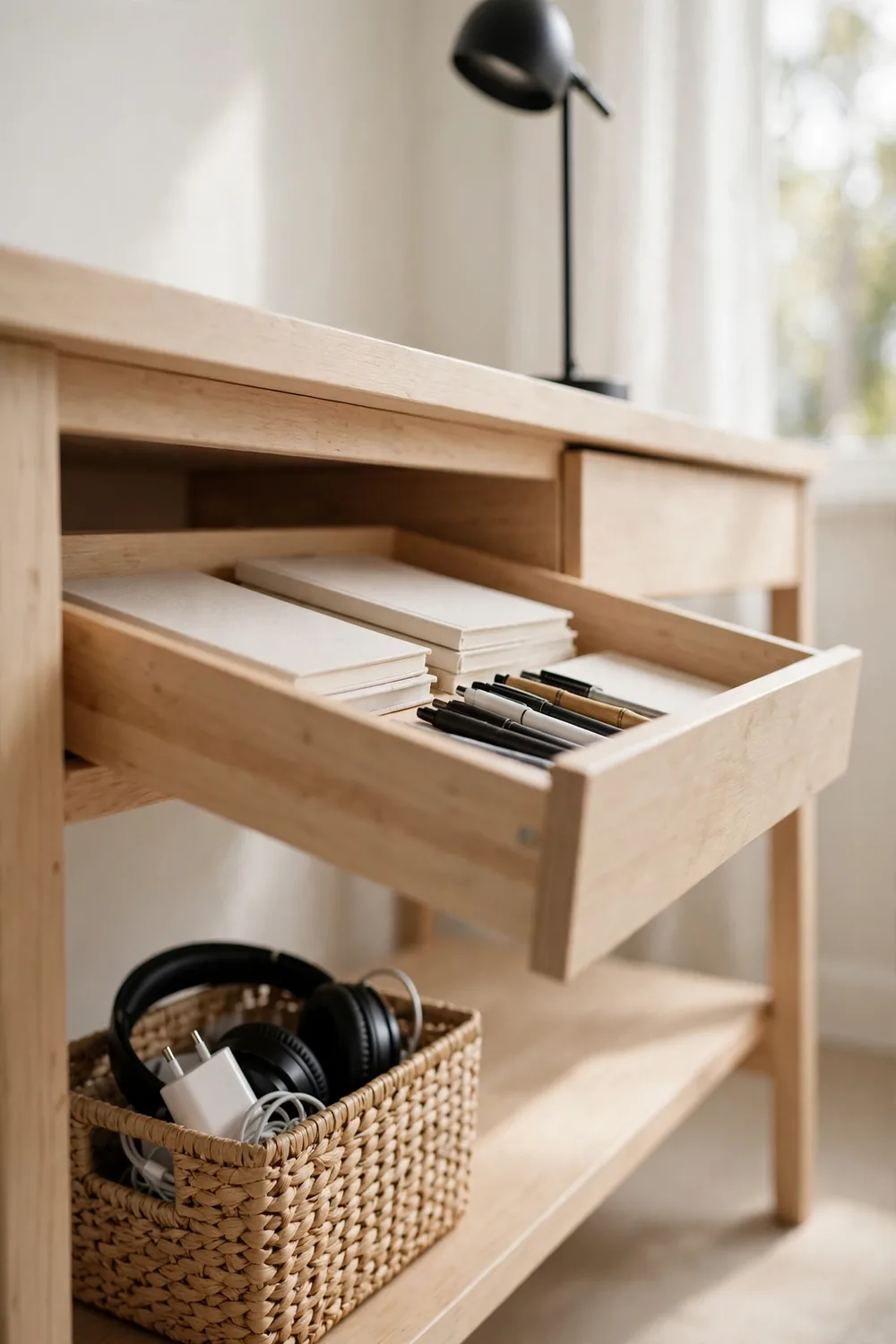
A desk without drawers still has storage space underneath.
- Mount a slim drawer under the desk top.
- Add a low shelf or basket between the legs.
- Use adhesive hooks under the edge for headphones.
Keep the space for your knees and feet clear, and the desk stays comfortable as well as tidy.
14. A Small Space Desk Nook
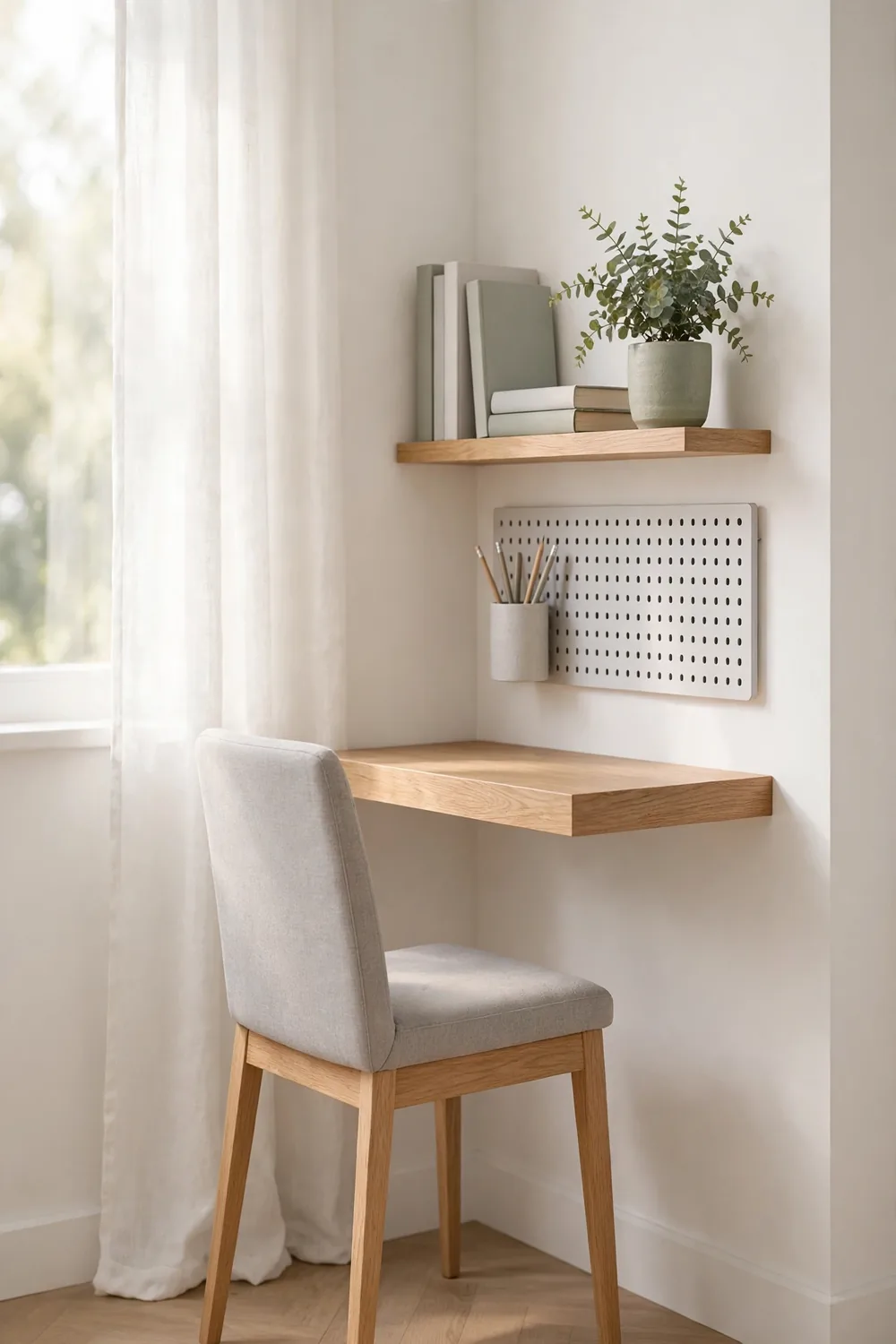
In a small home, a wall mounted desk saves floor space.
- Mount it at 28 to 30 inches high.
- Make it at least 20 inches deep for a laptop.
- Add a shelf or pegboard above for supplies.
- Choose a compact chair that tucks under.
A tiny desk nook works in a bedroom corner, a hallway niche or a closet with the doors removed.
15. A Cozy Creative Workspace
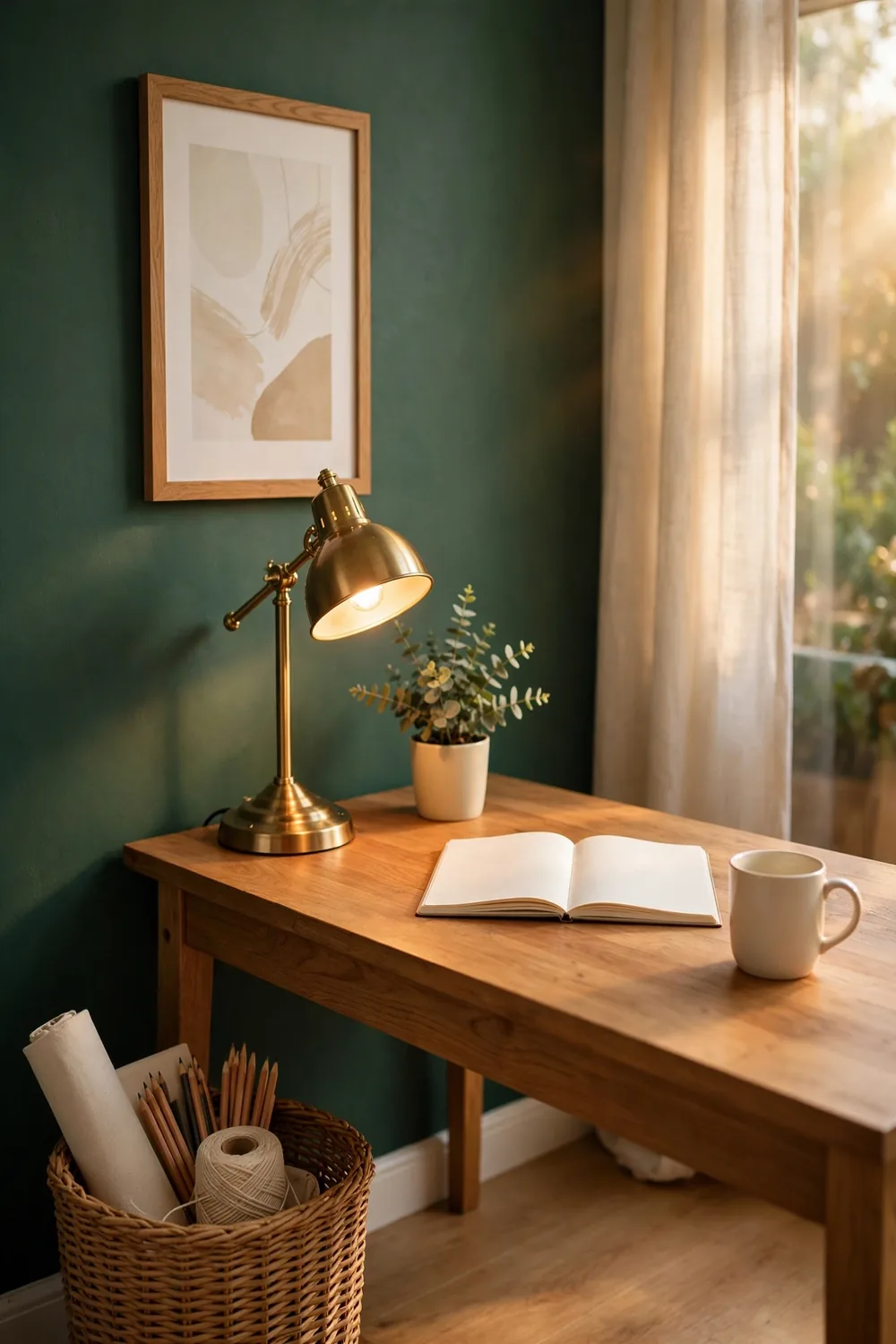
Cost: Low | Time: One afternoon | Skill Level: Beginner
An organized desk should still feel inspiring. Add one warm lamp, one plant, one piece of art and a comfortable chair. A deeper wall color behind the desk, like green or navy, makes the corner feel like a real workspace and helps you focus.
16. A Hidden Charging Station
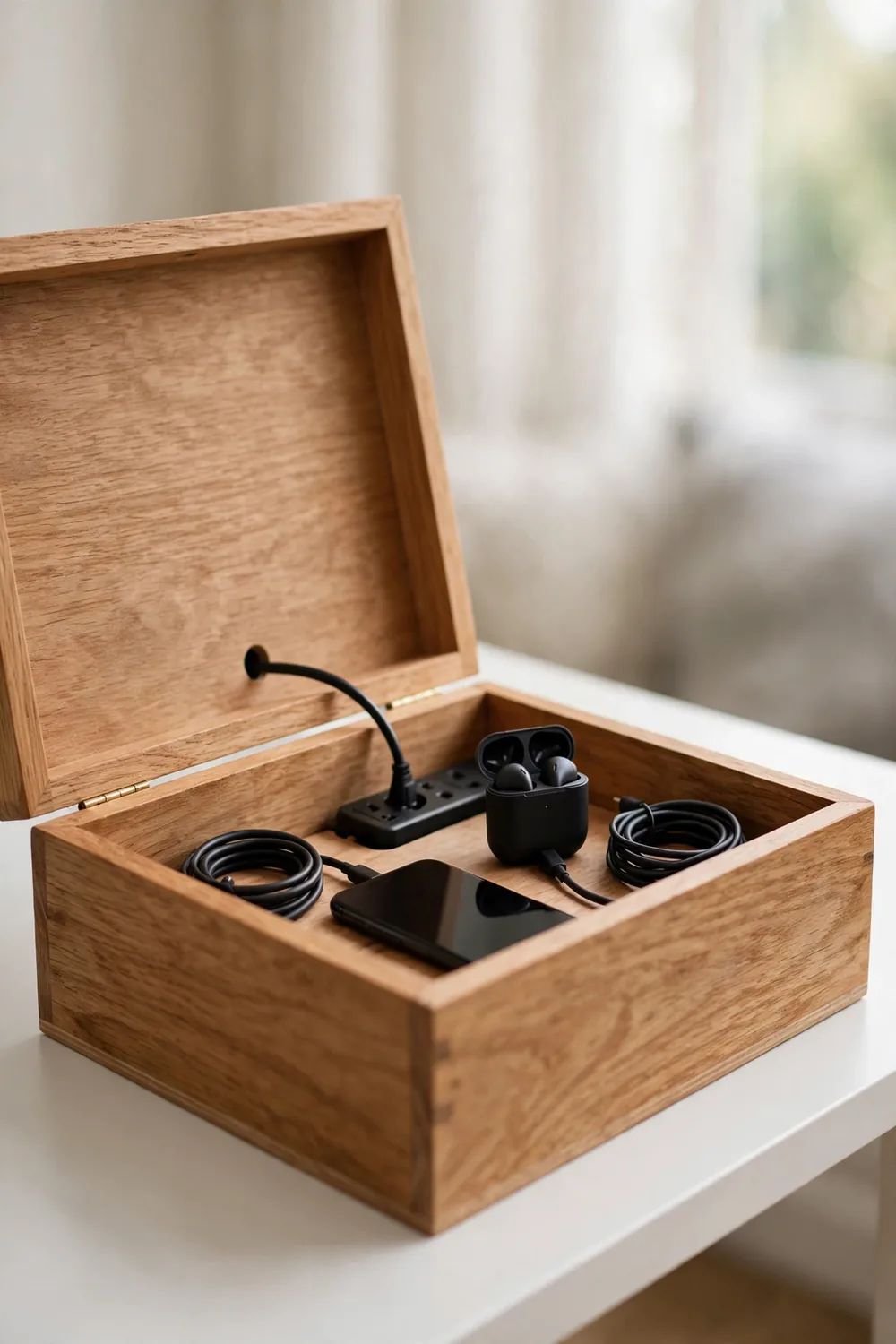
Chargers and cords are the most cluttered part of most desks.
- Choose a wooden or lidded box.
- Drill a hole in the back for the power cord.
- Put a small power strip inside.
- Charge phones and earbuds with the lid closed.
Everything charges in one place, and the desk stays clear of tangled cords.
17. A Weekly Desk Reset
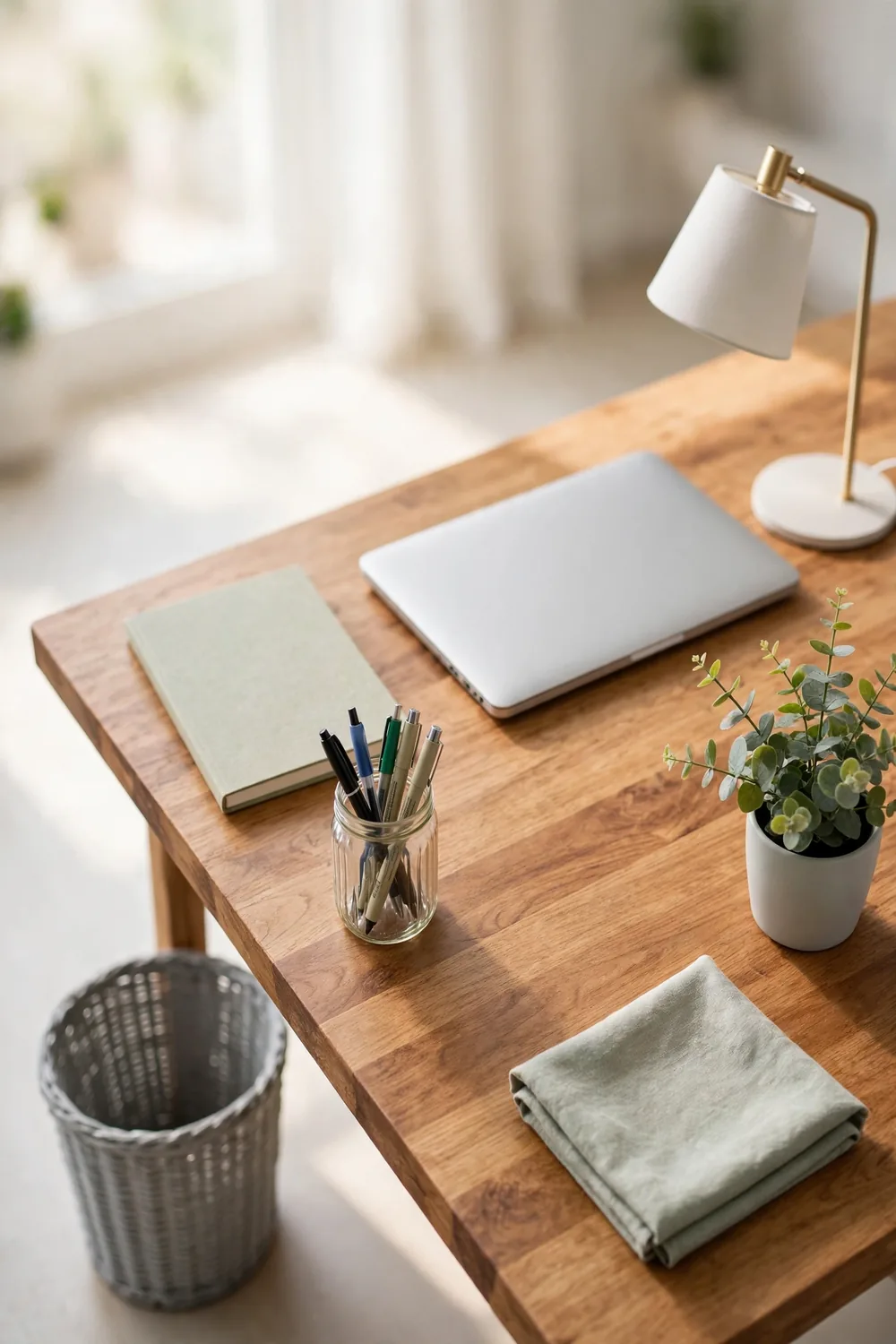
Do:
- Clear everything off the desk once a week.
- Wipe the surface and recycle old papers.
- Put supplies back in their zones.
Don’t:
- Let sticky notes and papers stay longer than a week.
- Keep broken pens or dried markers.
- Add new organizers before you clear clutter.
Clearing clutter takes about five minutes when you do it weekly, and the desk stays ready for work every Monday.
Frequently Asked Questions
How can I organize my desk on a budget?
Use jars, tin cans, cardboard boxes and scrap wood to make pen holders, drawer dividers, file holders and a monitor riser. Keep only daily items on the desk and store the rest.
How do I organize a desk with no drawers?
Add a slim drawer under the desk, a rolling cart beside it, a pegboard or shelves above and a basket on a low shelf below.
How high should a monitor riser be?
Most risers are 4 to 6 inches tall. The top of the screen should sit at or just below eye level, about an arm’s length away.
How do I hide cables on my desk?
Mount a cable tray under the desk for the power strip, bundle cords with straps and use binder clips on the desk edge to hold charging cables.
How do I stop paper clutter on my desk?
Use three trays: In, Action and File. Empty the In tray daily and the File tray weekly, and recycle anything you do not need.
What is a good size for a small wall mounted desk?
Mount it 28 to 30 inches high and make it at least 20 inches deep, so a laptop and notebook fit comfortably.
Final Thoughts
An organized desk does not need expensive organizers. Jars, boxes, a little wood and a few simple systems make a workspace that is calm, clear and easy to keep tidy.
This weekend, clear your desk completely, plan your zones and make one project, like a jar pen holder or cardboard drawer dividers. For more budget storage projects around the house, see our DIY storage bin ideas. These DIY desk organization ideas will help you start every workday with a clear head.

Written by Nora Bennett
Nora Bennett is the founder and editor of Olive & Loft. She shares calm, practical home decor ideas for every room and season that you can try this weekend.
About Olive & Loft →